
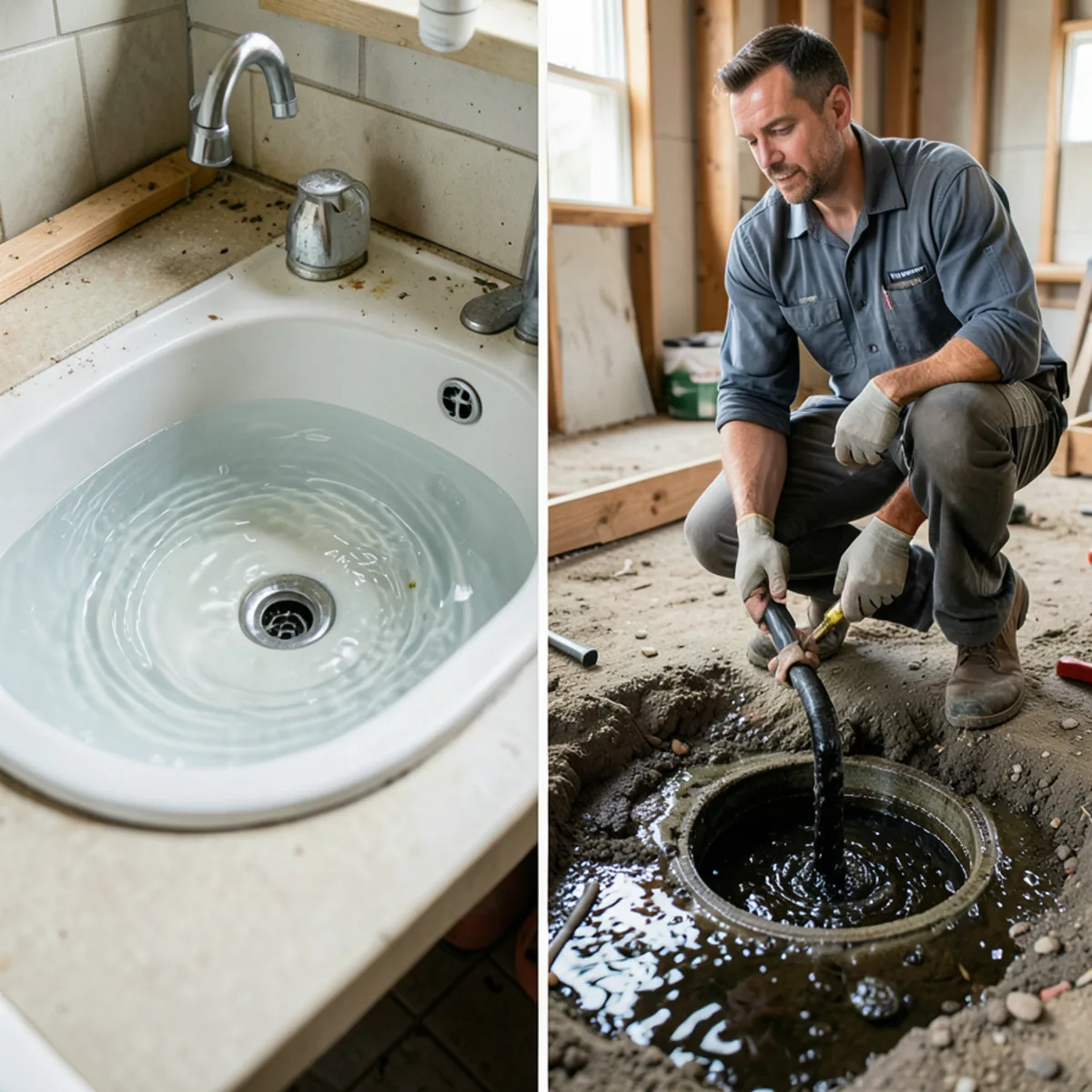
The Telltale Difference Between Branch Lines and Main Laterals
Your home's plumbing infrastructure is structured like a tree. Each individual plumbing fixture—such as your kitchen sink, powder room lavatory, bathtub, or laundry standpipe—drains through a secondary "branch line." These branch lines converge into central vertical stacks that drop down into the basement or foundation subfloor, emptying into a single horizontal pipe: the main building sewer lateral. When an isolated fixture clogs, only that specific sink or tub reacts. But when the main sewer lateral obstructs, wastewater has nowhere to escape, creating a hydraulic chain reaction across your entire home.
Diagnostic Sign 1: Multiple Fixtures Reacting Simultaneously
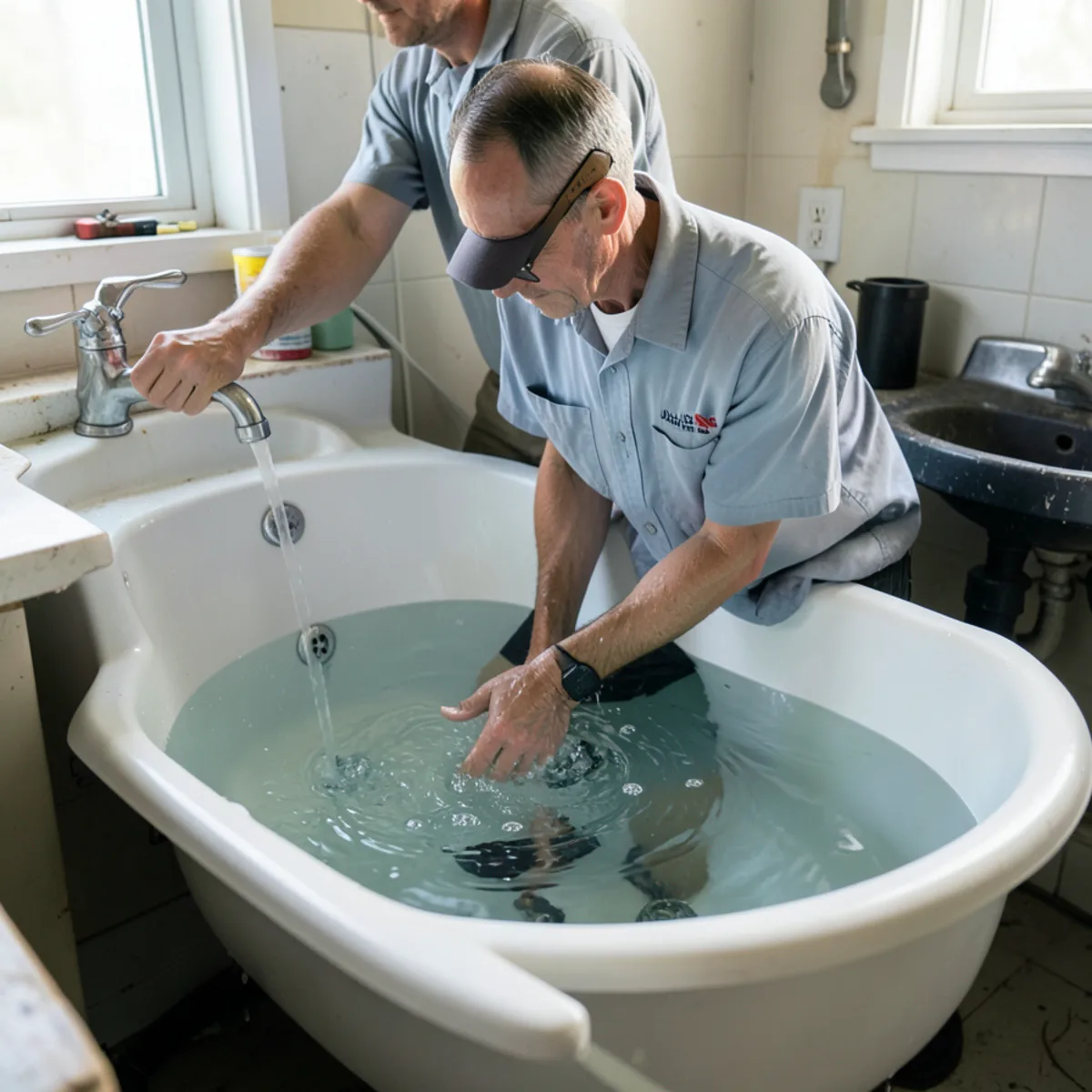
The most definitive sign of a main sewer line blockage is cross-fixture reaction. For example, if you run the bathroom sink and water begins gurgling inside the adjacent bathtub, or if flushing your master toilet forces water to bubble inside the hallway shower stall, the problem is not a simple hair clog in the tub. The main lateral is backed up, and wastewater is seeking the lowest gravitational escape route.
Diagnostic Sign 2: Washing Machine Discharge Overflows Basement Floor Drains
Modern washing machines discharge between 15 to 30 gallons of water in a rapid, high-pressure pump cycle. When this heavy volume surges down the vertical laundry stack, it hits the main lateral with significant velocity. If the lateral is choked with tree roots or grease, that surge cannot exit toward the street. It immediately backs up through the nearest lowest drain—which in most North Shore homes is the basement floor drain.
Diagnostic Sign 3: Sewer Gas Odors and Vent Stack Backpressure
When an underground main line clogs, sewer gases cannot vent freely through your roof stack. Every time water drains down a sink or tub, the air trapped between the water and the subterranean blockage must find an escape route. It bubbles upward through the water traps of lower-level toilets and floor drains, filling basements with noxious hydrogen sulfide and methane odors. If you detect distinct rotten-egg sewer odors accompanying slow drainage, a main lateral blockage is developing.
Diagnostic Sign 4: Toilets Failing to Clear Completely Despite Multiple Flushes
Toilets rely on atmospheric pressure and rapid siphoning action through the bowl trapway to evacuate waste. When the main line is obstructed, backpressure resists that siphonic pull. Bowls fill sluggishly, swirl without evacuating, or bubble vigorously as air burps backward. If multiple toilets across different bathrooms exhibit this sluggish siphoning simultaneously, the issue is never the toilet mechanics—it is always the main building drain.
Need an On-Site Sewer Camera or Rodding Crew?
We dispatch directly from 2200 Main St with commercial rodding cables, carbide root cutters, and self-leveling optical cameras.
Diagnostic Comparison: Branch Line vs. Main Sewer Clog
Use this reference table to evaluate your plumbing symptoms before you pick up the phone:
| Diagnostic Symptom | Single Branch Drain Clog | Main Sewer Lateral Obstruction |
|---|---|---|
| Affected Fixtures | Only one sink, shower, or toilet is sluggish | Two or more fixtures across different rooms or levels react |
| Basement Floor Drain Status | Completely dry and unaffected | Bubbling, wet, or actively overflowing with wastewater |
| Reaction to High Water Volume | Running water elsewhere causes zero change | Running water anywhere causes lower drains to fill |
| Sewer Odors Present | Localized sour food or hair smell at the drain | Pervasive rotten-egg hydrogen sulfide gas in basement |
| Correct Clearing Equipment | Handheld or compact 1/4" to 3/8" sink snake | Heavy industrial continuous steel rodding machine with root saws |
The Cleanout Test: How to Confirm Main Line Blockage Yourself
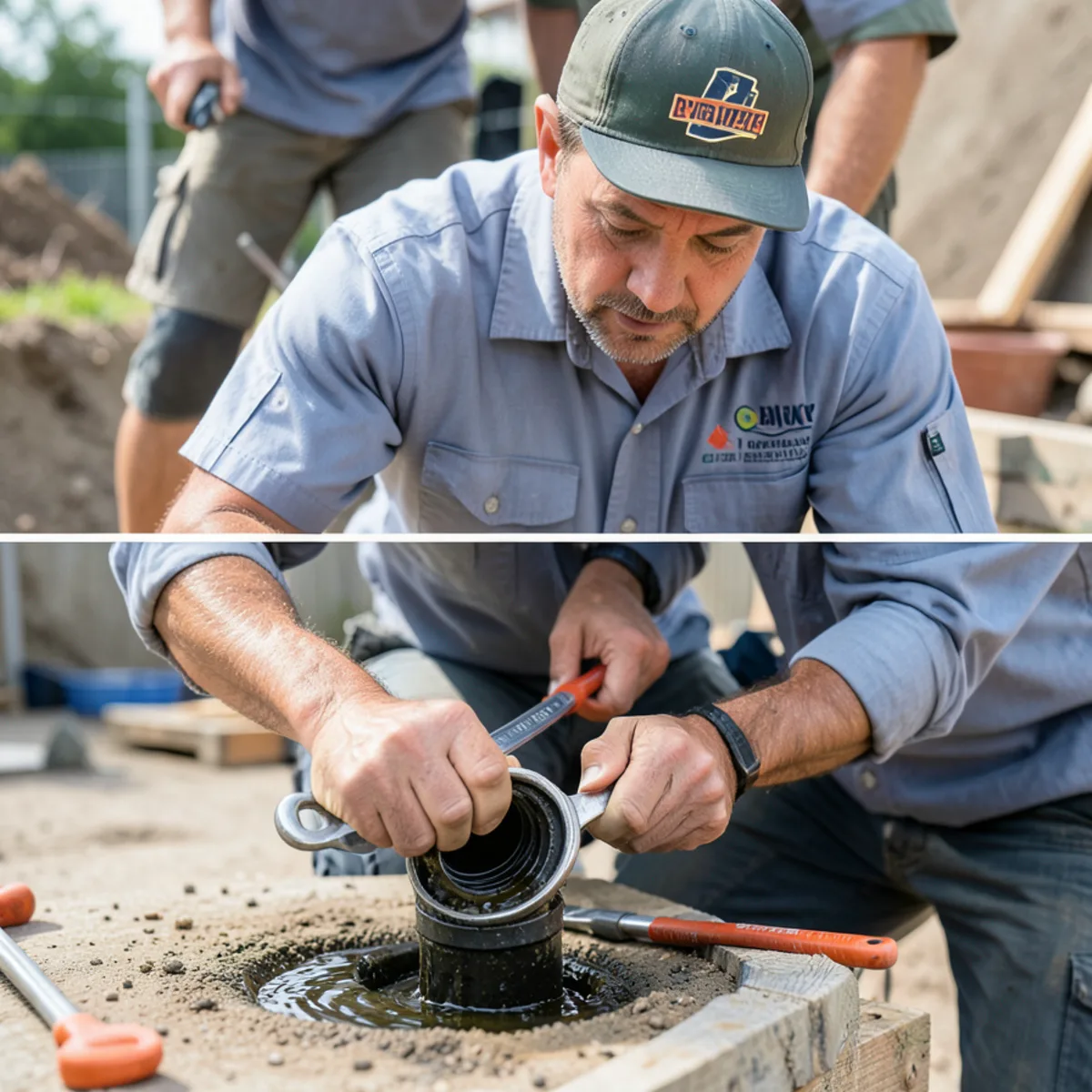
If you want 100% confirmation before calling our dispatch team, you can perform the cleanout inspection test. In most Evanston, Skokie, and Wilmette homes, the primary sewer cleanout is located in the basement near the foundation wall or in a low utility room, capped with a threaded cast-iron or brass plug. If you carefully loosen the cleanout plug with a pipe wrench and observe dark wastewater standing to the brim or weeping through the threads under pressure, your main lateral is obstructed. Stop using all water immediately. Before attempting to open your cleanout, prepare the surrounding floor. Lay down plastic sheeting or heavy towels and place a shallow 5-gallon bucket directly underneath the cap. Loosen the plug slowly by turning it counterclockwise just one-quarter turn. If dirty water immediately begins weeping out around the threads, tighten it back up immediately. That standing pressure confirms your line is backed up from the street or foundation, and removing the cap completely will cause a pressurized flood of sewage into your basement.
What to Do Immediately While Awaiting Service
Once you confirm a main sewer line obstruction, take immediate steps to prevent extensive property damage:
- Cease all running water: Do not flush toilets, run laundry, take showers, or operate the dishwasher.
- Keep family and pets away from damp basement floor drains or standing wastewater.
- Clear a direct path from your exterior door to the basement cleanout for the technician.
- Call Centerline Rodding & Drain at (321) 559-0657 for prompt main line power rodding.
Why Chemical Drain Openers Never Work on Main Lateral Clogs
Homeowners frequently pour chemical drain cleaners down toilets or sinks hoping to dissolve main line blockages. This is both ineffective and hazardous. Liquid drain openers are designed for small-volume sink traps. When poured into a 4-inch or 6-inch main line that is backed up with 50 to 100 gallons of standing sewage, the chemical is immediately diluted to near-zero efficacy. Worse, the corrosive acid sits trapped in your pipes, dissolving old lead solder, eating through vintage cast iron, and creating a severe chemical burn hazard for our service technicians when we open the cleanout to mechanically rod the pipe.
Expert Insight: Why Mechanical Cable Torque Matters on Main Lateral Clogs
Clearing an underground main lateral requires fundamentally different physics than clearing a localized bathroom or kitchen sink drain. Secondary branch lines typically measure 1.5 to 2 inches in diameter and can be cleared using lightweight 1/4-inch or 3/8-inch flexible drum snakes designed to negotiate tight 90-degree trap bends. In contrast, main building sewer laterals in Evanston, Skokie, and Wilmette are 4-inch cast-iron or 6-inch vitrified clay pipes buried 5 to 10 feet subterranean. Clearing these lines requires industrial continuous-feed rodding equipment powered by heavy 3/4-inch aircraft-grade steel inner-core cables. As the machine feeds the rotating cable 60 to 120 feet toward the municipal collector, the inner core stores immense torsional kinetic energy. When the hardened rotary cutting head encounters dense taproot masses or calcified scale, that stored rotational torque drives the dual-blade root saws through the obstruction without binding or snapping. Furthermore, professional technicians size the cutting head precisely to the pipe bore: running a full-diameter 4-inch or 6-inch cutter head ensures roots are sheared completely flush with the pipe walls rather than merely punching a temporary pilot hole that clogs again weeks later.
Post-Clearing Video Camera Diagnostics and Preventative Maintenance
Restoring toilet flushing and water drainage is only the first phase of an effective sewer repair. Once standing wastewater has drained to the street main, diagnosing the underlying structural cause is essential to avoid repetitive basement flooding. In older North Shore municipalities, sewer clogs are rarely isolated flukes; they are almost always symptoms of pipe degradation, such as shifted clay tile bells, misaligned joints, radial cracking, or aggressive silver maple root collars. Scheduling a high-resolution sewer camera inspection immediately following power rodding allows our technicians to inspect every joint along the lateral, confirm complete root removal, and identify whether preventative maintenance or structural lining is required. For mature properties with established parkway trees, scheduling preventative power rodding every 12 to 18 months reliably halts root expansion before woody fibers can choke the pipe bore and cause a catastrophic basement backup.